This article presents a complete overview of the main customs of the Kyjov region,
expanded with an explanation of symbolism, historical roots and regional
peculiarities.
Carnival (Fašaňk)
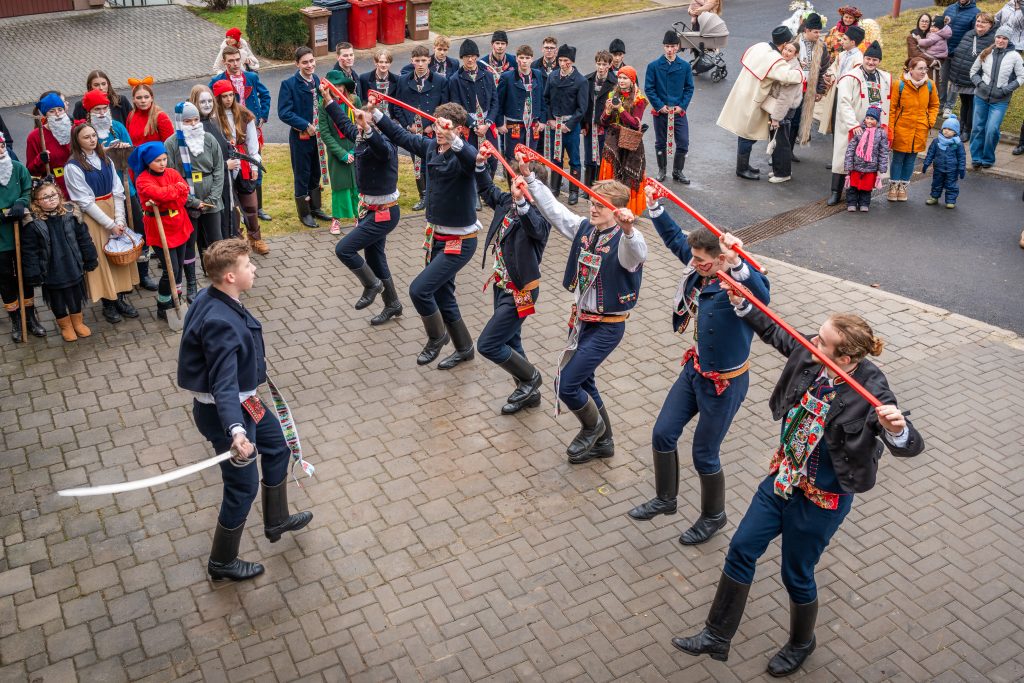
The cycle of spring customs begins with Carnival, which takes place during a period of relative calm from agricultural work. In pre-Christian times, this part of the year was crucial – preparations were made for the upcoming work, the outcome of which would determine the fate of the village. This goal was achieved by ceremonial masked processions, a dance of prosperity and other acts. During Carnival, young dancers and masquerades go from house to house and collect eggs, bacon (spiked on a sabre) and other gifts (currently, the households are agreed upon and there are about seven of them). The procession usually includes a bear (fertility), a horse (strength) or a masquerade wrapped in peas, which women are supposed to pluck so that the goslings hatch and the hemp grows tall. The sabre dance “Podšable” is symbolically related to the harvest – the higher the boys jump, the higher the grain is supposed to be. The procession ends at an agreed place with scrambled eggs made from the collected ingredients and the “burial” of a double bass as a symbol of the approaching Lent. The “misdeeds” of the past year are recalled in the allusions. More modern masks also appear.
Boys wear formal traditional clothes (boots, blue cloth trousers, embroidered shirt, waistcoat, riband, tie, belt with Turkish cloth, hat or fur cap and, depending on the weather, a blue cloth jacket).
Girls dress up as various masquerades and paint various cheerful pictures on the faces of boys and other onlookers.
Masks include the Grim Reaper, Gypsy, Jew, priest, bear and bear keeper, pig and butcher, craftspeople – baker, shoemaker, carpenter, hunter, chimney sweep, soldier, old woman with a litter, old man, groom and bride, nun, musicians (with various instruments), goat, scarecrow, gendarme, horse, postman. At the same time, more modern masks are also gaining popularity.
Easter
On Easter Sunday, families gather for a feast. In the church, cakes, buns, bread, eggs, wine, cheese and meat are blessed; these dishes are given to the family and to travellers. Easter Monday is the day of pomlázka (in Kyjov, “šlahačka”). The church took over a pagan ceremony in which all adults participated; men symbolically “expelled” illnesses from their wives with whips. These holidays are also holidays of love – girls still wait for the arrival of young men who go to the šlahačka and symbolically choose their partners in this way. On Sunday, the Moravian Ensemble organizes an Easter party with live music; just after midnight, the šlahačka takes place right in the venue. After the party, the girls get ready for the morning, the boys change into work clothes and write rhymes in front of the girls´ houses with white paint; In the morning they change back into their traditional clothes and walk around the village with the whip made over the weekend.
Boys wear formal traditional clothes (boots, blue cloth trousers, embroidered shirt, waistcoat, riband, tie, belt with Turkish cloth, hat or fur cap and, depending on the weather, a blue cloth jacket).
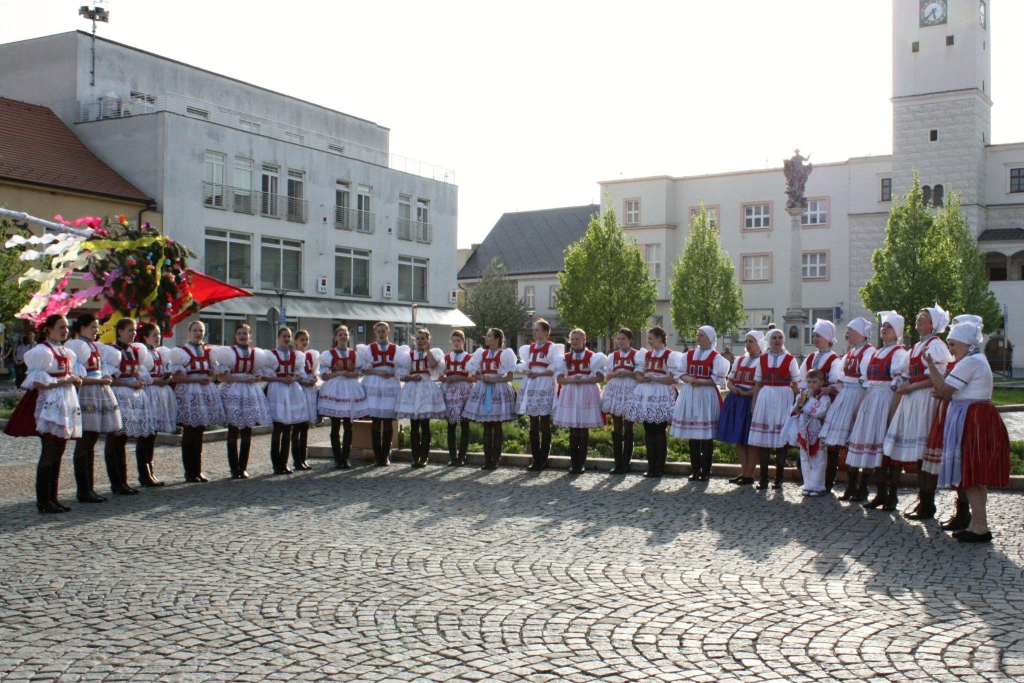
Girls wear: boots, black tights, petticoats, a štofka or plyška (dark red to purple skirts), an apron (a lace, a brocade or any white or embroidered apron), a riband around the waist (white, light blue), special laced sleeves (with blue or white bows), a waistcoat.
Erecting a Maypole
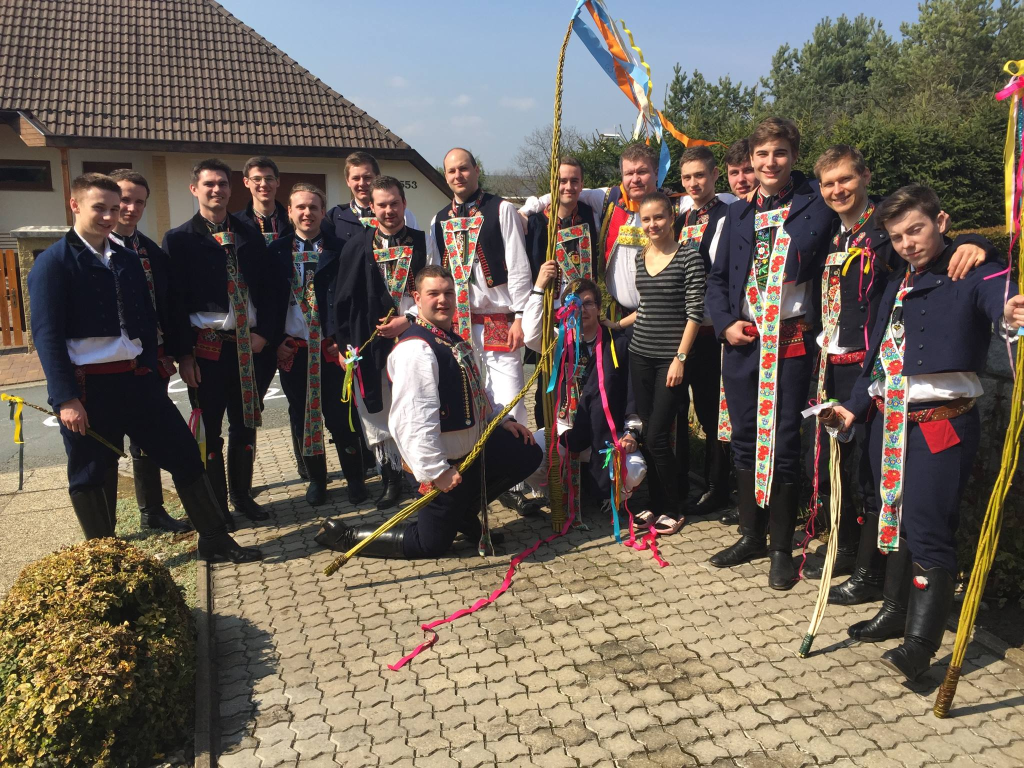
The Maypole is celebrated as a symbol of love, fertility and youth – it also plays the role of a “guardian” of the village. This is an ancient custom from pagan times. It was originally erected on the Saturday before the Hody-time, but today it is built on 30 th April. It is approximately 30m high, the trunk is made of spruce, the top of pine; before erecting it, the girls decorate it with a red “Turkish” scarf, roses and ribbons of crepe paper.
The boys wear working traditional clothes (boots, white linen trousers, shirt, belt, hat and sometime ševc – a blue apron).
Girls wear – boots, a red skirt, a white apron (lace or brocade), special laced sleeves, a waistcoat, a plait with a red bow.
Felling the Maypole
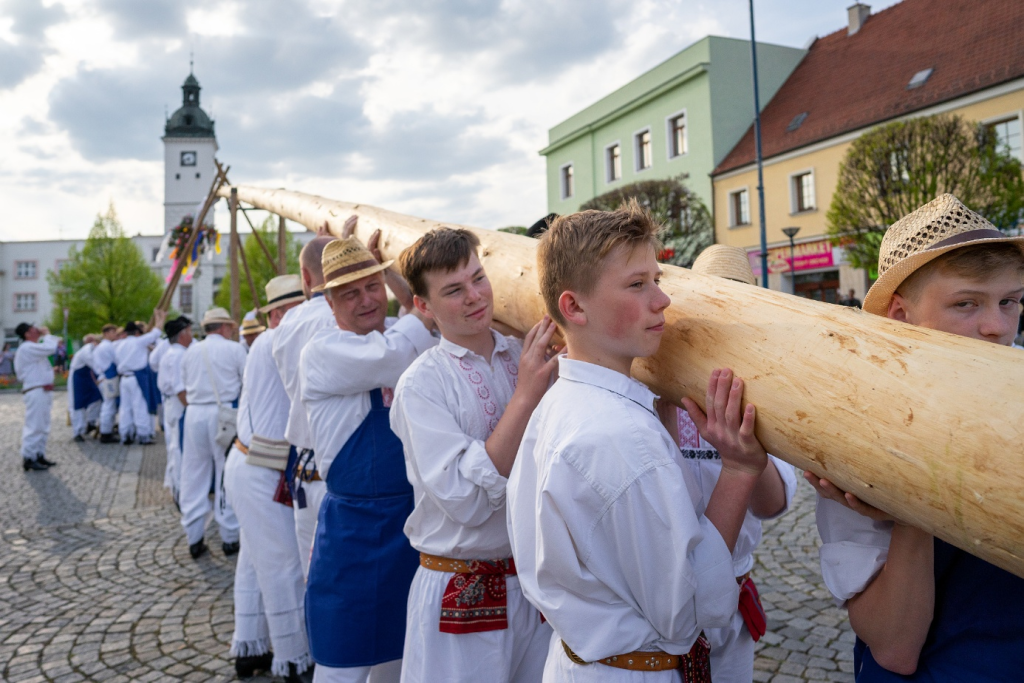
If the Ensemble manages to guard the Maypole throughout the month of May, the felling takes place on the last weekend of May.
The boys wear working traditional clothes (boots, white linen trousers, shirt, belt, hat and sometime ševc – a blue apron).
Harvest Festival
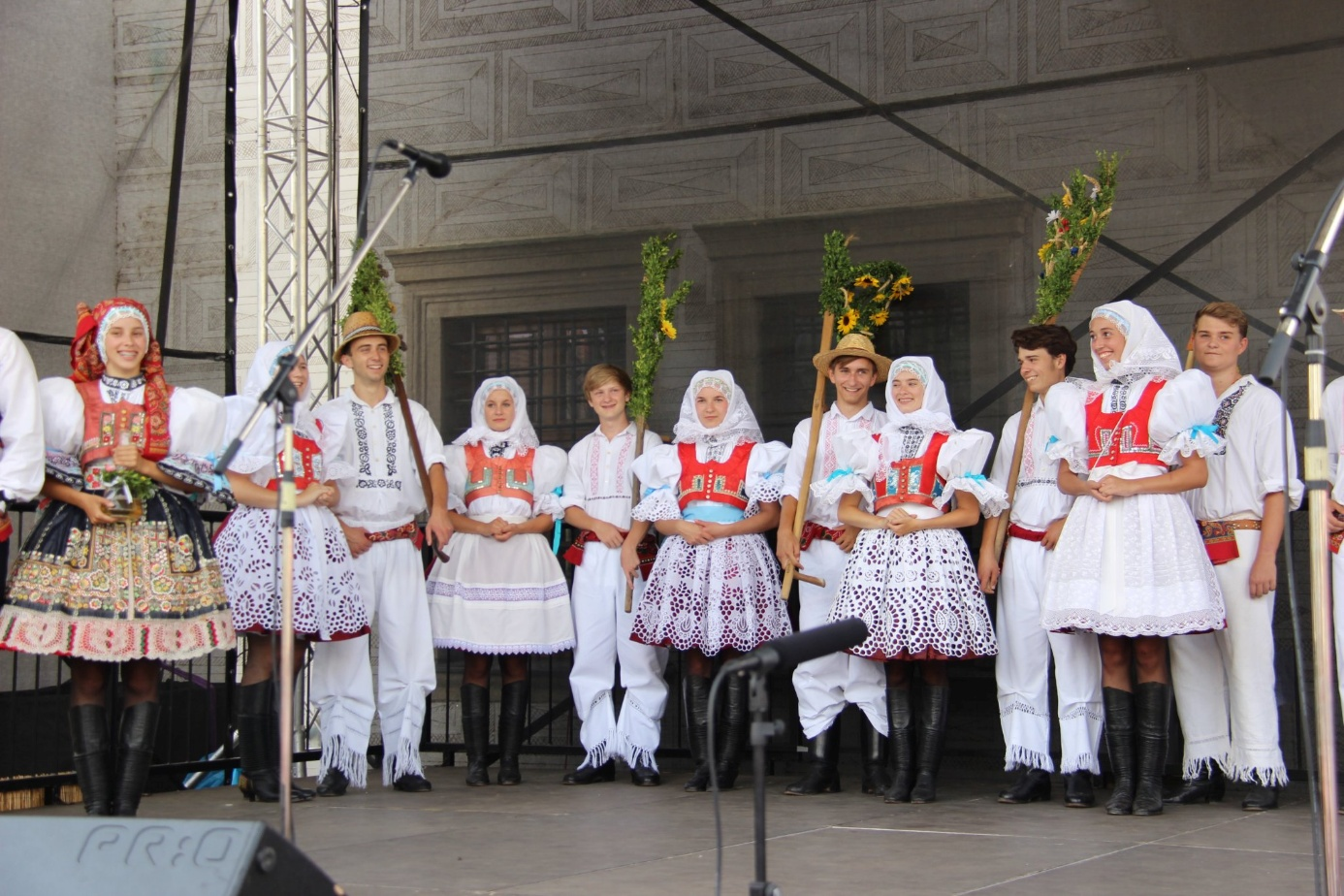
The end of the harvest is celebrated with the Harvest Festival (Thanksgiving); the reapers decorate their scythes, sickles and rakes and carry a wreath to the elected farmer, to whom they hand the wreath over as a thanks for his year-round care. In the past, people also asked for a reward for the work done. In the past, but also in the present, the harvest is important for the future fate of the population. Today, the parade starts at 2:00 p.m. at the U Jančů pub and ends in the square with a short program. After the short program, the cymbalom band remains playing for a while. Then a brass band usually takes over.
The boys wear working traditional clothes (boots, white linen trousers, shirt, belt, hat and sometime ševc – a blue apron).
To show the variety of traditional clothes, girls wear two different types of clothes – a so-called light variety / a lace scarf, a red fabric skirt, lace apron or white brocade apron, black tights, boots / and the second part is so-called "semi-light" / hair worn in a plait, or covered by a plain scarf, work linen sleeves, a waistcoat, a red linen skirt, a blue work linen apron, no tights, black felt boots.
Four weeks till Hody-time
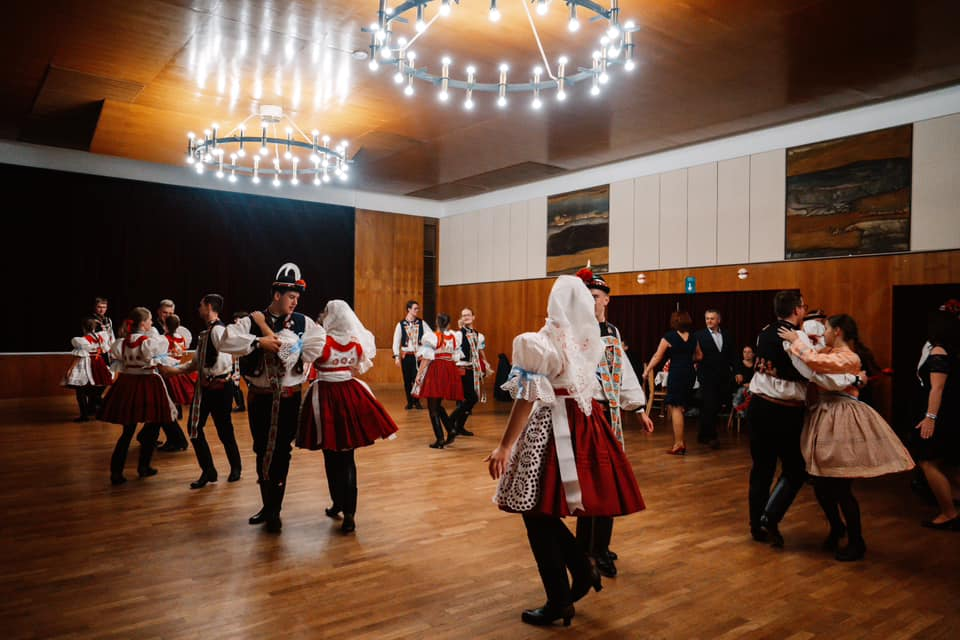
Traditional party with live music (cymbalom band) taking place four weeks before Hody-time. During the party, two boys an two girl elected to represent the youth for the next year are presented to the public.
Boys wear formal traditional clothes (boots, blue cloth trousers, embroidered shirt, waistcoat, riband, tie, belt with Turkish cloth, hat and, depending on the weather, a blue cloth jacket).
Girls wear: boots, black tights, petticoats, a štofka or plyška (dark red to purple skirts), an apron (a lace, a brocade or any white or embroidered apron), a riband around the waist (white, light blue), special laced sleeves (with blue or white bows), a waistcoat.
Hody-time
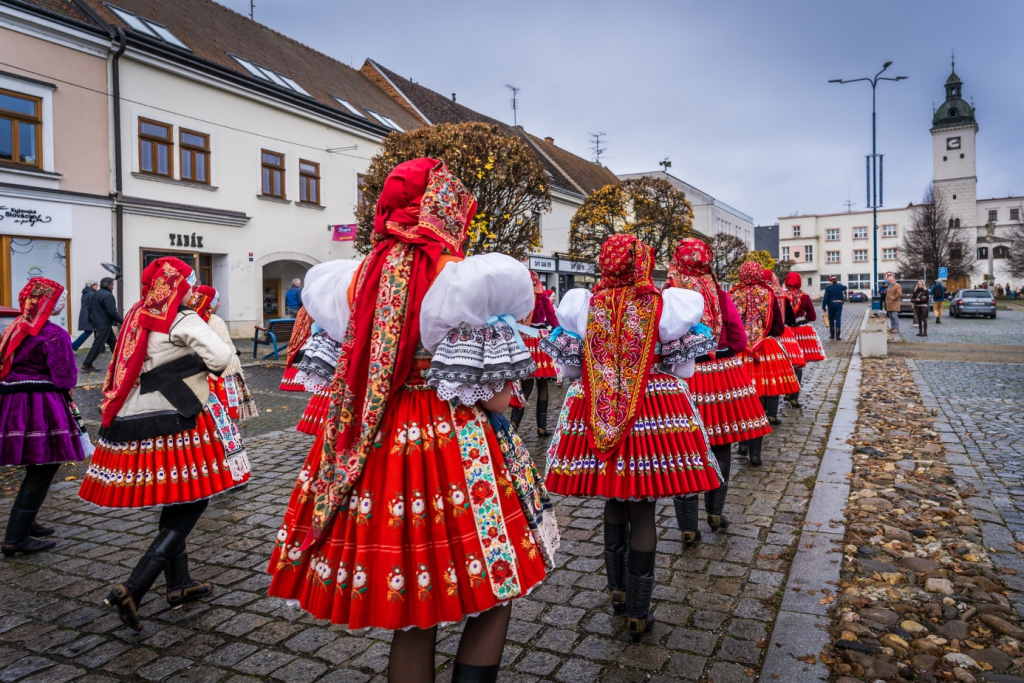
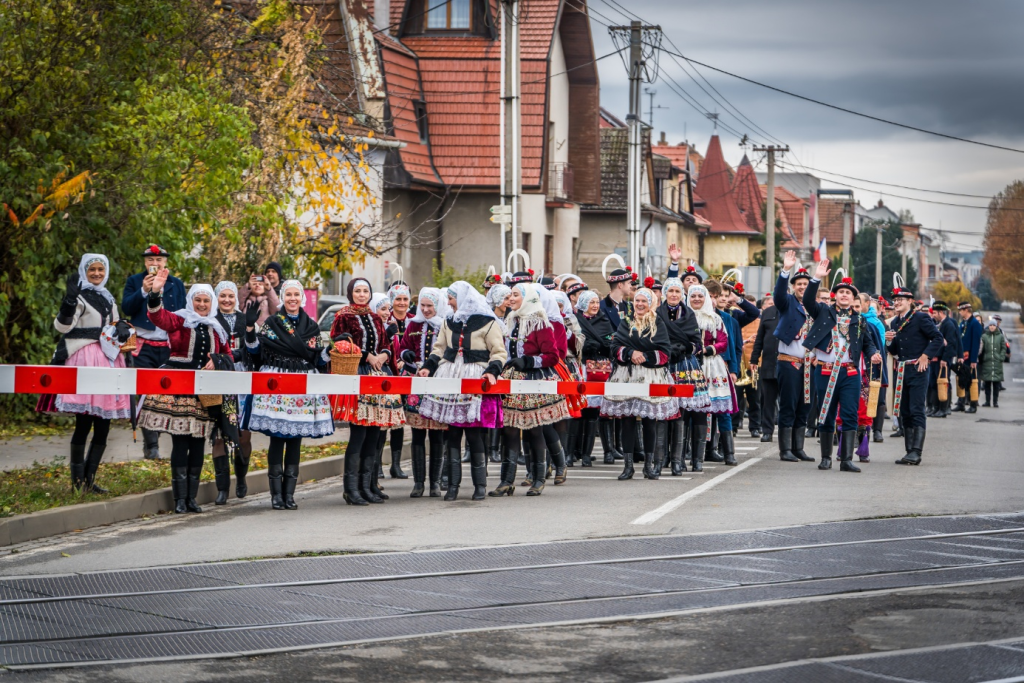
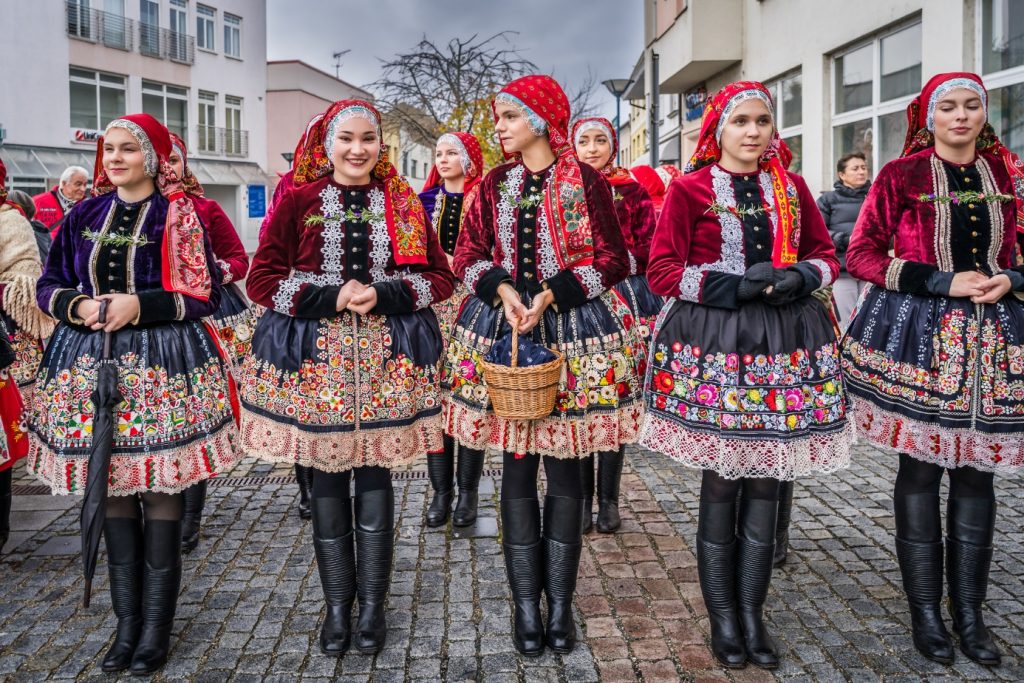

The original meaning of the festival, which took place in the autumn, was to give thanks for the harvest and to try to ensure it in the following year. Later, the Hody-time festivals in individual villages were based on the celebration of the patron saint´s day to whom the local church is consecrated. In Kyjov, the patron saint of the first church was Saint Martin which means the festival is celebrated on 11 th November. These days the main protagonists of the festival are two young couples elected to supervise and organise the festival. Dance parties are held in the evenings for three days. On Friday evening, there is a rosemary party (with a cymbalom band), where a decorated twig of rosemary should be worn by everyone as a symbol of the festival. On Saturday at 2:00 p.m., a parade leaves the chateau for the town hall to obtain permission for the festival; if the mayor permits the festival, the parade then continues to collect the two elected girls and the Hody-time wreath. On Sunday, the procession leaves again at 2:00 p.m. from U Jančů pub together with the Hody-time Martin, who later guards the Hody-time duck.
Boys wear formal traditional clothes (boots, blue cloth trousers, embroidered shirt, waistcoat, riband, tie, belt with Turkish cloth, hat, depending on the weather, a blue cloth jacket).
Girls:
Friday:
– šatka, čepec, rukávce, kordulka, štovka and a white apron. It is not suitable to wear a velvet or brocade apron, as these are worn by the stárky. Black tights and krabůvky shoes.
Saturday:
Procession: – red turečák, čepec, rukávce, black kadle, kordulka, pávka, fjertůšek, opasůvka, black tights and krabůvky shoes.
Instead of rukávce, a kožůšek may also be worn; underneath it, a manka with a kordulka is worn.
Dance party: rukávce, kordulka, štovka and a white apron. A brocade apron may already be worn here. Black tights and krabůvky shoes.
Sunday procession – šatka, čepec, rukávce with a kordulka, or a kožůšek — a kacabaja is also possible — pávka, fjertůšek, opasůvka, black tights and krabůvky shoes.
St. Catherine´s Day Party
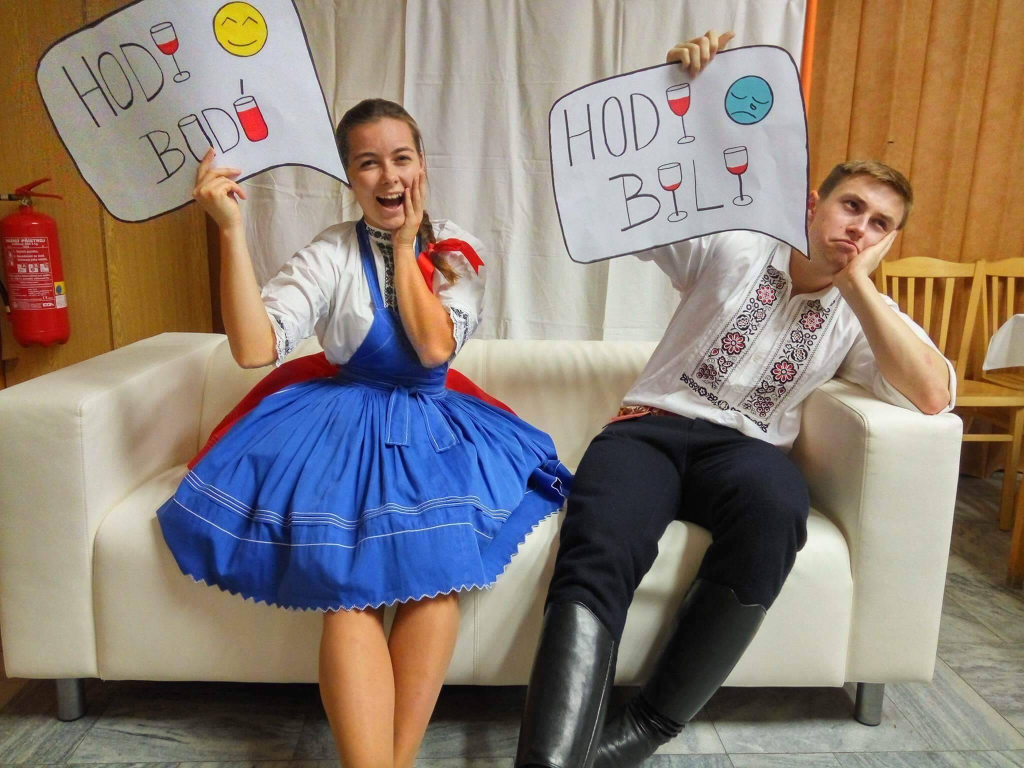
A lively party led by the young women of Kyjov. Ladies ask men for dance throughout the whole evening. The party culminates with “stealing an apron”. During the evening, members of the ensemble perform with an unconventional program; the female dancer with the greatest number of “stolen” aprons gets a well-deserved solo.
Boys wear formal traditional clothes (boots, blue cloth trousers, embroidered shirt, belt with Turkish cloth,)
St. Lucy´s rounds
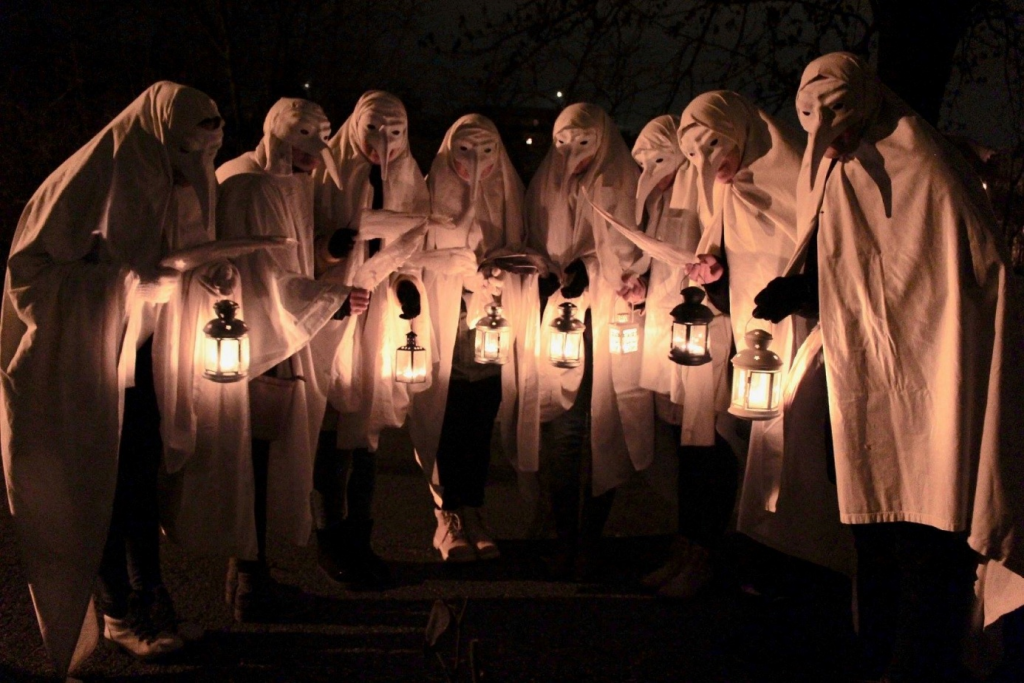
The girls are wrapped in a white sheet, with masks on their faces and feathers in their hands; they visit households and check every corner. The white colour symbolizes the virgin purity of Saint Lucy, who dedicated her life to the Christian faith and God, for which she was cruelly punished. She became the patron saint of seamstresses, tailors, coachmen and other crafts. On the feast of Saint Lucy, no one was allowed to spin or thread feathers; where this happened and the girls found out, they took the housekeeper´s cone of yarn and blew the feathers around the room. The rounds usually take place after dark and the girls are usually silent during them; they signal the “cleansing” by symbolically sweeping the corners with feathers. Local customs vary, but the common denominator remains the emphasis on tidiness and cleaning the home before Christmas.
Singing at the Christmas Tree
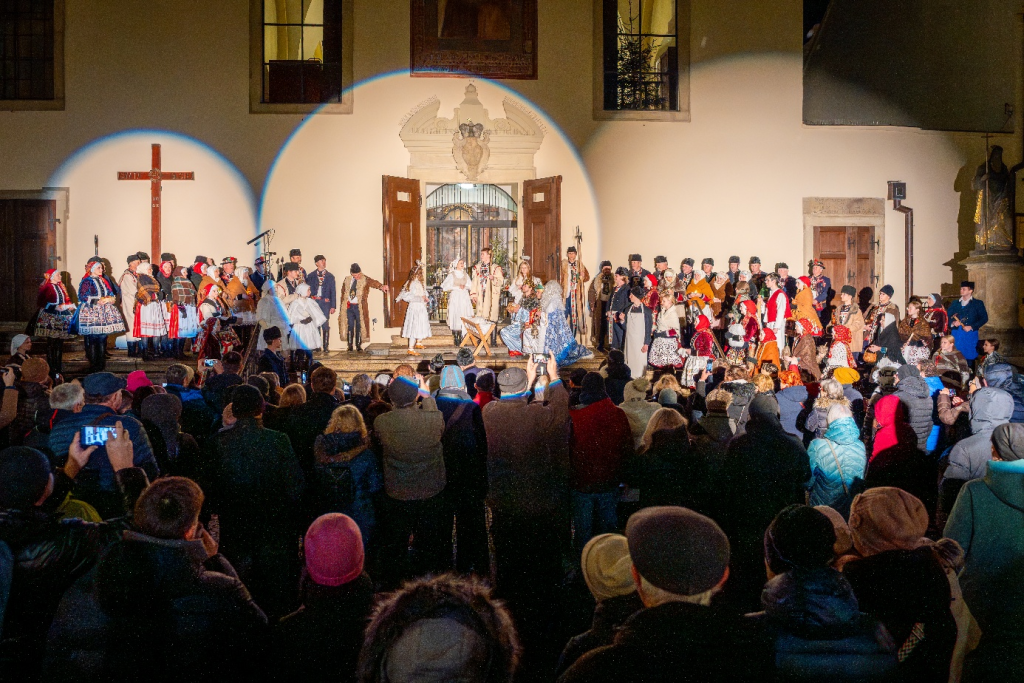
A traditional gathering on the steps of the parish church of the Assumption of the Virgin Mary and St. Cyril and Methodius – a joint carol singing ending with a live nativity scene. The event also offers a quiet “stop” in the pre-Christmas time and sets the mood for the Christmas holidays.
Christmas Day party
The Christmas Day party closes the calendar of the year with a festive meeting of the ensemble members, supporters and the public. The evening combines carols and repertoire from the Kyjov region with dance performances and free entertainment; the guest of the evening usually brings a separate block that expands the program in terms of genre. During the party, shorter musical blocks alternate with space for dancing, collective carols are sung and there is also a thank-you to colleagues and partners for the past year.